
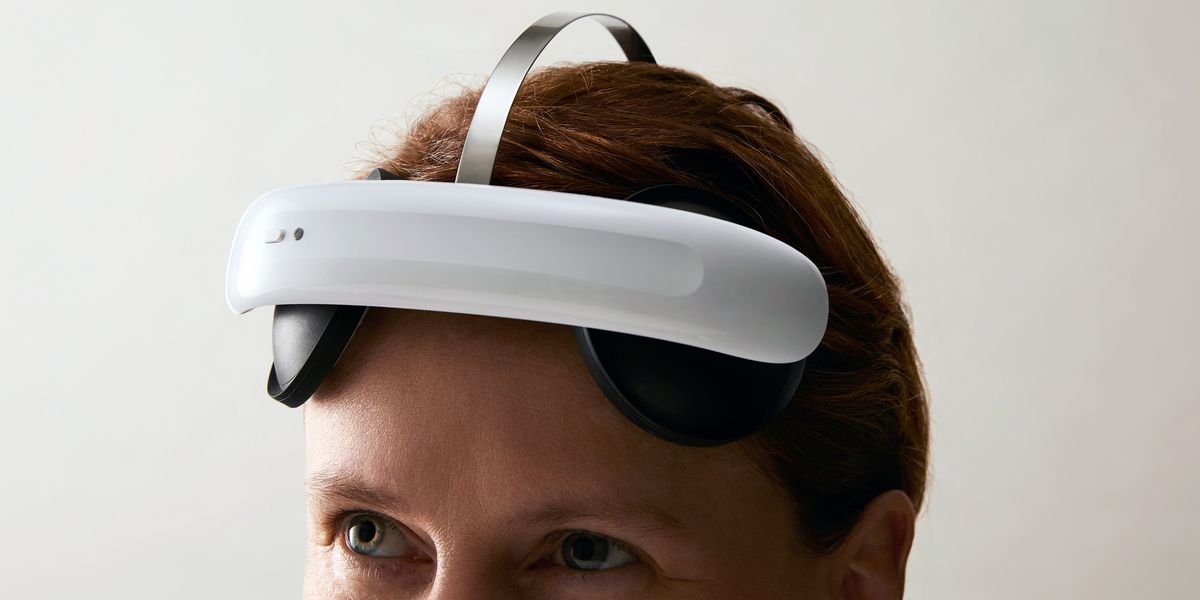

For years, a small group of technology enthusiasts have been applying gentle electrical current to their brains in an effort to gain cognitive benefits, improve sleep, or aid memory. While brain stimulation, also referred to as neuromodulation, can take many forms, transcranial direct current stimulation (tDCS) emerged as a reasonably safe, affordable choice for at-home experimentation for a range of purposes.
These devices have often been home-brewed or sold as wellness tools, but in her research into the do-it-yourself tDCS community, Anna Wexler, a medical ethicist at the University of Pennsylvania, found that in addition to brain boosting, many practitioners were self-medicating, using electrotherapy to treat symptoms of depression and anxiety. Until recently, there were no medical tDCS devices with U.S. Food and Drug Administration approval.
In December the FDA approved a tDCS headset produced by Flow Neuroscience for treatment of major depressive disorder. The decision paves the way for the Swedish company to make its device available in the United States via prescription, and millions of people may now have access through traditional health care to a noninvasive, nondrug treatment option for depression that can be self-administered in the home.
“It’s significant for patients who now have an alternative to pharmacotherapy with its limits, and it’s a big deal to the brain-stimulation community,” says Marom Bikson, who leads the neural engineering group at City College of New York and coauthored an analysis of the regulatory decision. He also cofounded a company, Soterix Medical, which produces a tDCS device that has been approved for in-clinic treatment of depression in multiple countries.
“tDCS is a very safe technology. That’s why we get the kind of approval we get, but it can seem scary and kind of [like] science fiction,” says Erik Rehn, the CTO of Flow. The design philosophy of the headset has focused on safe, at-home use without supervision, he says. Similar to other tDCS devices, reported side effects are typically mild, such as skin irritation near electrode sites on the forehead.
tDCS for Depression Treatment
Parallel to the DIY movement, researchers have been investigating tDCS therapeutics and its effects on the human body for decades. How exactly does electricity treat depression? As with any case where the brain meets the mind, questions of biology and medicine become philosophical, and clear answers become very difficult. But tDCS does seem to help some of the people that use it.
In Flow’s pivotal trial, patients applied a 2-milliampere current in 30 minute sessions for five days a week for three weeks, and then three days a week for seven more weeks. Fifty-eight percent of participants responded to treatment, compared to 38 percent that received a faked form of treatment in the sham arm of the experiment.
“We find that tDCS is helpful for some patients on its own and for some as part of a treatment plan, but its effects vary among individuals and we want to understand who it would be most helpful for,” says Cynthia Fu, a psychiatry researcher at the University of East London, and a Flow clinical trial site leader. As part of a larger treatment plan, Flow could be used in conjunction with standard treatments, such as talk therapy, lifestyle changes, and importantly, pharmaceutical drugs.
Perhaps in part because of the many treatment variables, there has been mixed evidence for the effectiveness of tDCS depression treatment broadly, and some tDCS researchers have suggested neuroimaging could help personalize care and improve results. Such treatment plans could require testing on expensive equipment such as MRI machines. But Rehn says that Flow is committed to access that scales, and is exploring individualized care through other means, such as machine learning.
Recent estimates suggest that around 8 percent of U.S. adults experience at least one major depressive episode in a given year. That number appears to be trending upward and is more common in young adults. Meanwhile, in a 2023 survey, 15 percent of U.S. women and 7 percent of U.S. men used antidepressants.
Other types of “electroceuticals” have been used to treat depression, though they have their drawbacks. Electroconvulsive therapy and transcranial magnetic stimulation are mature therapies, but require repeated in-person visits to a clinic. Deep brain stimulation has exploratory use, but involves surgery to install a neural implant.
The FDA restricts how treatments can be marketed, but doctors can prescribe an approved device for off-label usage, hopefully following a body of medical evidence to treat other diseases. In the case of Flow, the FDA approval includes wording that suggests use of tDCS as a first-line option, rather than cases where other treatments have failed. But doctors may prescribe tDCS for depression in a variety of situations, or might even expand applications to manage other mental health issues, such as anxiety.
Other practical questions include how insurance will cover the device, or what sorts of assistance might be needed to help some depressed patients stick to a treatment schedule. These questions may take months to be answered, and Flow may have competition in the near future.
In January, a second company, Neurolief, announced FDA approval of its own at-home headset device for treatment of depression. Neurolief’s product does not use tDCS, but a different method to stimulate the brain, and acceptance may follow a separate track, says Bikson.
Further complicating matters, although a Flow headset will require a prescription for the foreseeable future in the United States, the device is already for sale to the public without a prescription in the United Kingdom and European Union, and a very similar device is already available in the United States on a direct-to-consumer basis.
In 2021, Flow Neuroscience acquired Halo Neuroscience, and under the Halo brand name currently sells a headset using what it calls “identical tDCS hardware.” It is marketed as a wellness device, rather than a medical one, and does not require a prescription. The Halo website claims benefits to mood, sleep, and focus, and advertises a full price around US $600.
The simultaneous medical approval and consumer availability of twin devices is a striking example of a larger trend, says Wexler. Some patients could be making a choice between Halo and Flow headsets for treatment. “It’s blurring the lines between consumer products and medical devices,” she says.
Whatever the name on the device or the eventual proportion of tDCS devices sold medically or for wellness, the approval legitimizes and opens a medical avenue of access to the technology. “I think there’s a huge unmet need,” says Wexler. “We need more effective therapeutic options for depression.”
From Your Site Articles
Related Articles Around the Web


